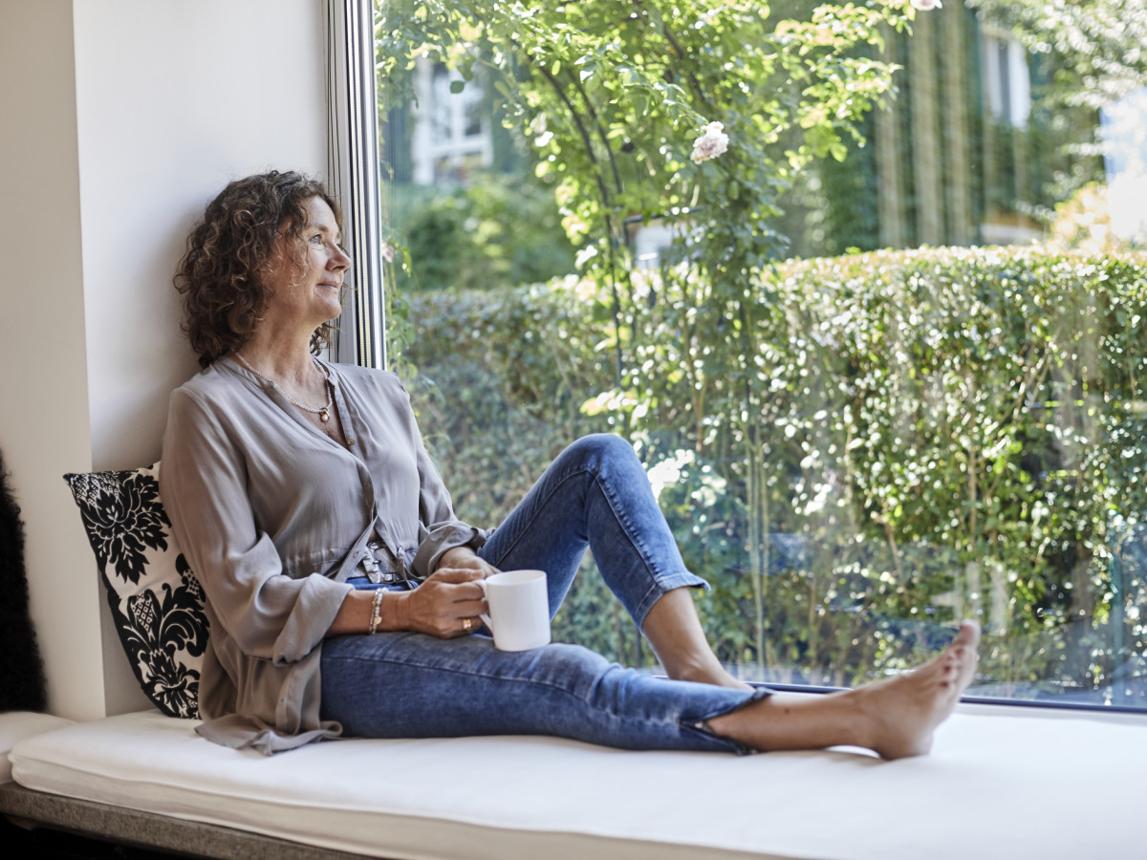
For years, I dreamed about having more time to myself.
When my girls were younger, life was a constant juggle of being Mum, working, earning money and generally keeping our little world turning. There was always someone who needed something, somewhere I needed to be or something patiently waiting on the sidelines to be dealt with.
Then my girls became teenagers.
They started having their own lives, making plans and heading out into the world without me. Sometimes I’d watch them doing things I used to love myself, before motherhood and responsibility moved in, rearranged the furniture and apparently decided they were staying.
Suddenly, there were gaps in my days.
The freedom I’d been craving for years finally rocked up at the front door, tapped her foot impatiently like I was late for a catch-up we’d arranged months ago and said, “Well? Here I am. What are we doing?”
And I had absolutely no bloody idea.
This was what I’d wanted, wasn’t it? All that delicious “me time” I’d fantasised about when the girls were younger and I couldn’t go to the toilet without someone requiring assistance, information or food.
Except now that I had it, freedom felt unexpectedly lonely.
Some days, with no Mum tasks to complete and nobody needing me, I’d become so restless that I’d take myself to the supermarket just to have somewhere to go. I didn’t necessarily need anything, but apparently wandering purposefully through the grocery aisles contemplating whether we needed another avocado was easier than sitting at home with nowhere I had to be.
I’d spent years waiting for “me time”. I just hadn’t considered what would happen when I finally got it and wasn’t entirely sure who “me” was anymore.
And that uncomfortable little realisation brings me to something I think many of us begin questioning as our roles change: our sense of self in midlife.
What Is a Sense of Self?
Your sense of self is essentially the inner understanding you have of who you are. It’s made up of your values, beliefs, personality, interests, experiences, relationships and the roles you hold in life, all bundled together into the person you recognise as you.
The APA describes identity as a person’s sense of self encompassing psychological and interpersonal characteristics, social roles, affiliations, memories, goals, values and beliefs. APA Dictionary of Psychology – Identity
The interesting thing is that when someone asks us who we are, most of us instinctively start listing what we do.
I’m a mum. I’m a business owner. I’m a writer. I’m a daughter. I’m a carer. I’m the person everyone calls when something goes pear-shaped because apparently I give off strong “she’ll know what to do” energy.
Those roles genuinely are part of our identity, but they can become so familiar that we stop noticing how much of our sense of self has become attached to them.
Which is fine… until one of them changes.
Then you’re left with a surprisingly confronting question:
Who am I when nobody needs anything from me?
How Does Your Sense of Self Develop?
None of us wakes up one morning at 18 with a fully formed identity tucked neatly under one arm.
Our sense of self develops over time through family, culture, relationships and experiences. Along the way, we also absorb all sorts of messages about who we’re supposed to be. Some parts of us are celebrated and encouraged, while others are quietly ushered towards the back of the room because they’re inconvenient, impractical or don’t quite fit with what other people imagined for us.
Maybe you were wildly creative but encouraged to choose something more sensible. Perhaps you were adventurous until mortgages, children and responsibilities arrived carrying spreadsheets and asking whether you’d considered the long-term financial implications.
Sometimes nothing dramatic happens at all. We simply become very, very good at the roles life hands us.
Mum. Employee. Daughter. Business Owner. Provider. Fixer. Carer. Responsible one.
Some of those roles fit beautifully. Others start pinching around the edges but we keep wearing them because we’ve had them forever and, besides, everyone recognises us in them.
The tricky part comes when we’ve worn them for so long that we struggle to remember who else is underneath.
Why Your Sense of Self Can Change in Midlife
Midlife has a funny habit of wandering into the house and moving the furniture around when you’re not looking.
Children become more independent. Relationships change. Careers that once felt important might suddenly feel like a jacket you’ve outgrown. Friendships shift, parents age, our bodies change and things we once happily tolerated start receiving a firm absolutely not from somewhere deep within us.
Research into women’s experiences of midlife has even identified “rediscovering self” as one of the themes that can emerge as relationships, responsibilities and life circumstances change. The Challenges of Midlife Women – Seattle Midlife Women’s Health Study
Suddenly, a life that made perfect sense for years can feel slightly unfamiliar.
When a Life That Fits on Paper Doesn’t Quite Fit You
I think there are a lot of women sitting quietly at this stage of life wondering:
How the hell did I end up here?
Or perhaps the more unsettling question:
Is this it?
You can love the life you’ve created and still wonder who you’ve become within it. You can adore your children while missing parts of the woman you were before motherhood. Or you can be grateful for a career that supported you for decades and still realise you don’t want to spend the next fifteen years doing it.
You can even have a life that looks perfectly respectable from the outside while some long-neglected part of you has started rattling the cage saying, “Excuse me, I’ve been very patient, but are we ever going to talk about what I want?”
That doesn’t necessarily mean anything has gone wrong. Your sense of self can change over time because you change over time.
The woman you are at 50 isn’t supposed to be identical to the woman you were at 25 and, frankly, that’s probably for the best. Twenty-five-year-old me had her charms, but I’m not sure she needs access to the steering wheel again.
She can choose the playlist.
The Different Versions of You Are Still You
Most of us have different sides to ourselves and bring them forward depending on where we are and who we’re with.
There’s work-you, Mum-you, daughter-you, best-friend-you, first-date-you and the highly competent version who can solve everybody else’s problems while somehow forgetting where she left her own glasses.
Then there’s home-alone, bra-off, nobody-needs-anything-from-me-you.
They’re all real.
The more interesting question, particularly in midlife, is:
Which version of you has been hogging the microphone?
For many women, the responsible selves have enjoyed a very long headline act.
Meanwhile, the playful one is somewhere backstage checking whether her pass still works. The creative one has been told, “We’ll get to you later.” The adventurous one is waiting for everyone else’s calendar to clear, and the woman who simply wants to do something because it makes her happy is wondering whether she needs to submit a formal application.
And “later” has an irritating habit of turning into years.
What About the Parts of Yourself You’ve Lost Along the Way?
This is something I’m still exploring myself.
As my girls have become more independent, I’ve had opportunities to be creative again, socialise more, try different things and reconnect with parts of myself that became quieter while I was busy being Mum and keeping life moving.
I wouldn’t say I’ve triumphantly “found myself”, though. That sounds far too tidy, as if I misplaced Stephanie behind the couch cushions and one good clean-out solved the problem.
It’s been much more like tiptoeing back into the world like a reluctant toe approaching its first ice bath.
A little bit in… Ooh, bloody hell, that’s cold.
Back out.
A bit of pacing around the edge.
Then another go.
Rediscovering Yourself Doesn’t Have to Be Dramatic
Perhaps that’s what rediscovering your sense of self actually looks like: not one enormous cinematic Aha! THIS IS WHO I AM! moment, but a collection of smaller experiments that gradually show you who you’ve become.
You try things, remember things and change your mind along the way. Something you adored at 30 might now bore you senseless, while something you never imagined wanting suddenly has you thinking, Ooh… what’s this then?
I’m still not “there”, wherever there is. I know there’s a lot more Stephanie to uncover, and I’m beginning to think that might actually be part of the fun.
Why Does a Strong Sense of Self Matter?
Having a strong sense of self doesn’t mean walking around with complete certainty about who you are and precisely where you’re going. If that’s the qualification, I’m afraid most of us have been disqualified before morning tea.
It’s knowing yourself well enough to recognise what matters to you, what feels right, what doesn’t, what you’re willing to compromise on and what you’re no longer prepared to squeeze yourself into just to keep everybody else comfortable.
For me, this is where sense of self and self-loyalty start holding hands. It’s one thing to know what matters to you; it’s another to actually back yourself when that knowing bumps up against everybody else’s expectations. If that’s something you’re working on too, I’ve written more about how to build self-loyalty and back yourself without burning out.
Knowing yourself influences your relationships, friendships, work, boundaries and how you spend the increasingly precious currency of your time.
Because it’s difficult to create a next chapter that genuinely feels like yours if you’re unconsciously following a script written for a version of you who existed twenty years ago.
For me, enough space to hear myself think appeared when my girls needed me less. Initially, I treated empty space like an awkward guest at a dinner party and desperately tried to keep it entertained.
Hence the unnecessary supermarket excursions.
Eventually, though, I started getting curious about it.
How Do You Build a Stronger Sense of Self?
I don’t think you need to book a silent retreat, dramatically reinvent yourself or announce to your family that you’re going away to “find yourself”. Although if that involves a lovely hotel, fluffy robe and nobody asking what’s for dinner, I’m certainly not here to stop you.
Building a stronger sense of self can start much closer to home.
Get curious about yourself again. Notice when you feel most alive and when you feel flat. Pay attention to the people, places and activities that turn your internal lights on rather than dimming them. Then try something simply because you want to, without needing it to be productive, profitable, sensible or useful to anyone else.
There’s some self-trust involved here too: learning to hear your own yes and no before your very helpful overthinking department calls an emergency meeting and talks you out of both. I’ve had a few lessons in that department myself, particularly while dating, which I wrote about in Self-Trust in Dating: How to Listen to Your Intuition.
Questions to Help You Reconnect With Yourself
Perhaps sit with a few questions:
- Who am I when nobody needs anything from me?
- When do I feel most like myself?
- What did I once love that I’ve quietly stopped doing?
- Which roles in my life still fit me, and which have started pinching around the edges?
- Where am I saying yes when I really want to say no?
- What am I curious about now?
- If nobody judged my answer, what would I like more of in my next chapter?
You don’t need to drag out the journal and interrogate yourself under a spotlight until answers appear. Sometimes it’s enough to carry one question around for a while and notice what starts tapping you on the shoulder.
The question that makes you squirm a little might just be the one worth inviting in for coffee.
You Don’t Have to Become Someone New
There’s a lot of noise around midlife reinvention.
New body. New career. New relationship. New purpose. New improved version of you, apparently rising at 5am, drinking something green and having completed her meditation before the rest of us have located our glasses.
Good for her.
I think I’ll take a different route.
Maybe we don’t always need reinvention. Sometimes what we’re looking for is reconnection, with creativity, friendships, curiosity, pleasure, adventure or whatever parts of ourselves became quieter while we were busy doing everything life required of us.
There are days when having nobody needing me can still leave me feeling flat, but I’m learning not to treat every patch of empty space as an emergency that needs filling.
Sometimes I can let it shuffle around and make itself comfortable, because empty space can also be where something new finally has room to show up.
Or perhaps something old.
A part of you that’s been sitting patiently in the waiting room for years, flicking through increasingly outdated magazines and wondering when somebody is finally going to call her name.
Frequently Asked Questions About Sense of Self
What does it mean to have a sense of self?
Having a sense of self means having an inner understanding of who you are, including your values, beliefs, personality, interests, roles and the qualities you recognise as part of your identity.
What are the different senses of self?
We naturally express different aspects of ourselves depending on the situation. Your professional self, social self, family identity and private self might look different, but they can all be genuine parts of the same person.
Can your sense of self change over time?
Yes. Your sense of self can change over time as your relationships, experiences, priorities and life circumstances change. Major transitions, particularly in midlife, can make us much more aware of those shifts.
Is it normal to feel like I’ve lost my sense of self?
Life transitions can leave you questioning who you are, particularly when roles or relationships that have shaped your identity begin to change. Exploring your values, interests and needs can help you reconnect with yourself. If the feeling is persistent or causing significant distress, consider discussing it with a qualified mental health professional.
How do I build a stronger sense of self?
Building a stronger sense of self can start with becoming curious about your values, needs, interests and boundaries. Reflection, journaling, new experiences and small choices based on what genuinely matters to you can all help you understand yourself more deeply.
What is the difference between sense of self and self-esteem?
Your sense of self relates to who you understand yourself to be, while self-esteem relates more closely to how you feel about that person. They’re connected, but they aren’t the same thing.
Maybe This Is the Next Chapter
For years, I thought freedom was what would happen when my girls were old enough not to need me quite so much.
Then freedom finally arrived, knocked on the door and caught me completely unprepared.
I’m starting to understand her better now.
Freedom isn’t simply having nobody else to look after or nowhere you have to be. There’s another side to it: learning what you want to do with the space when it finally belongs to you.
I’m creating again. I’m spending more time with friends. I’m trying things, changing things and slowly getting reacquainted with myself. Sometimes I’m confidently striding forward; other times I’m still the reluctant toe hovering suspiciously over the ice bath.
There’s more of Stephanie in there.
I know there is.
And I suspect there’s more of you in there too.
Maybe your next chapter isn’t about transforming yourself into a completely different woman. Maybe it’s about getting reacquainted with the parts of you that got lost in the noise, welcoming some of them home and discovering a few new ones along the way.
Freedom might already be standing at your front door, tapping her foot.
Perhaps the question isn’t “What am I supposed to do now?”
Perhaps it’s:
“Who am I when nobody needs anything from me — and who might I become now that I finally have room to find out?”
